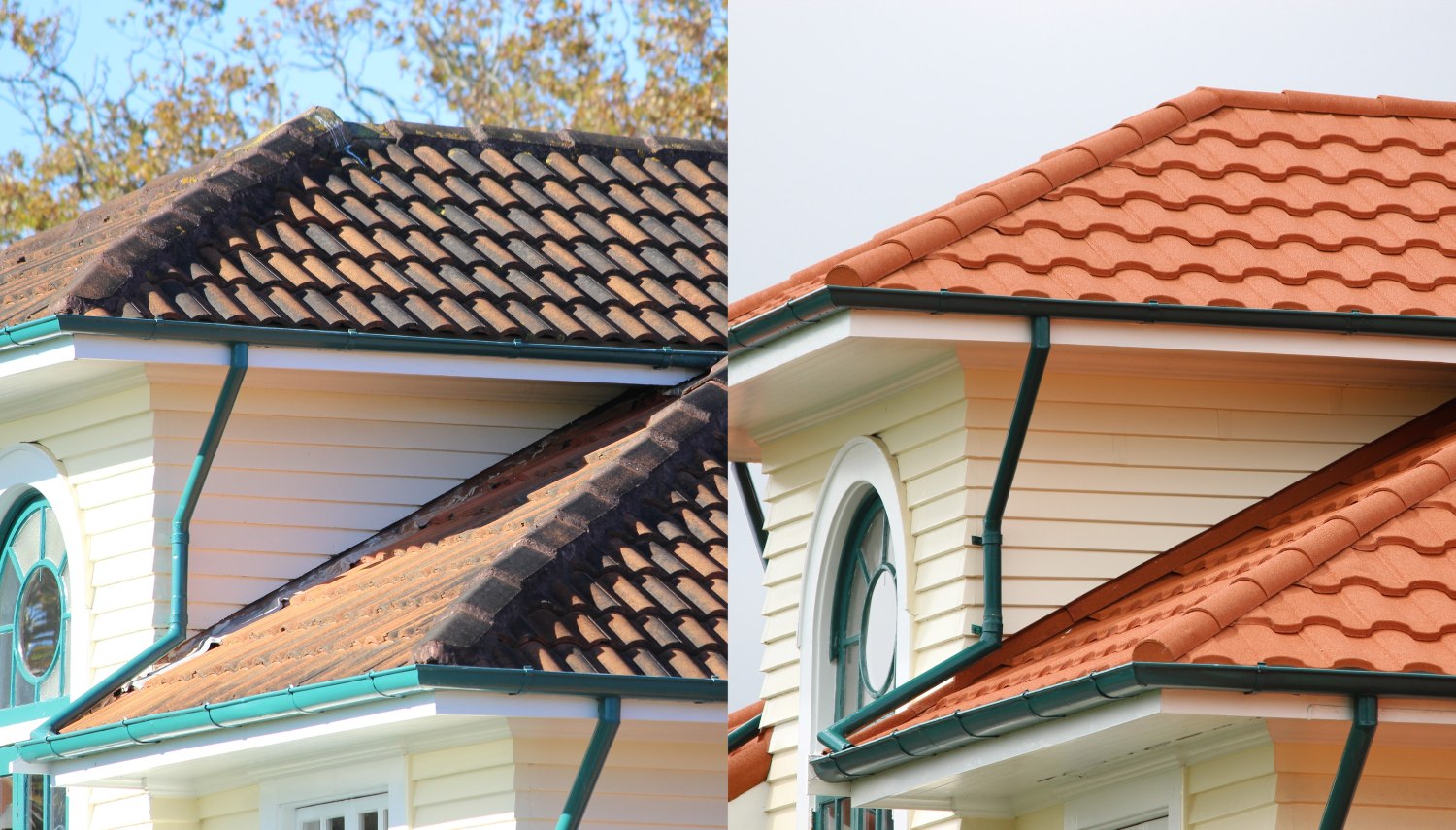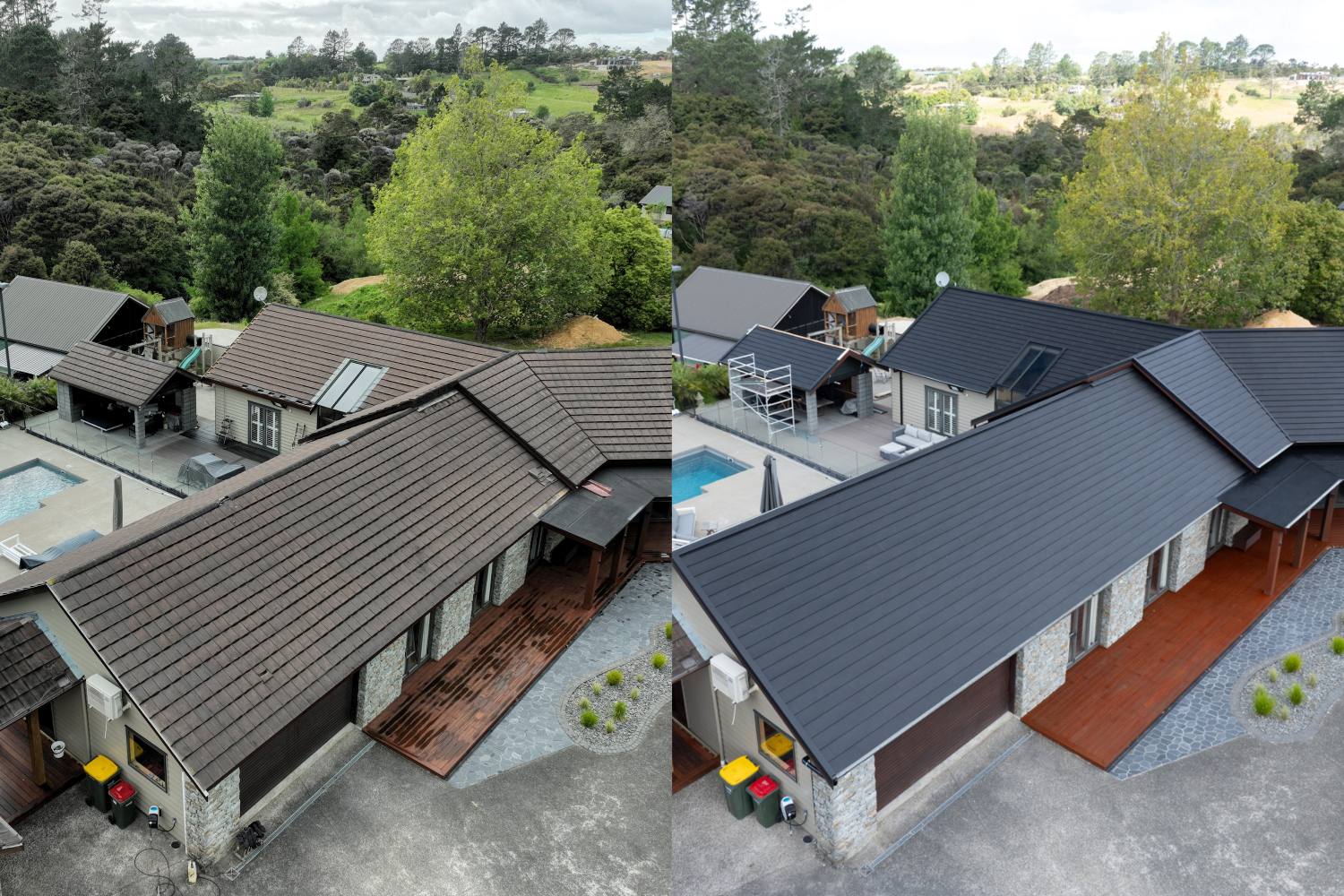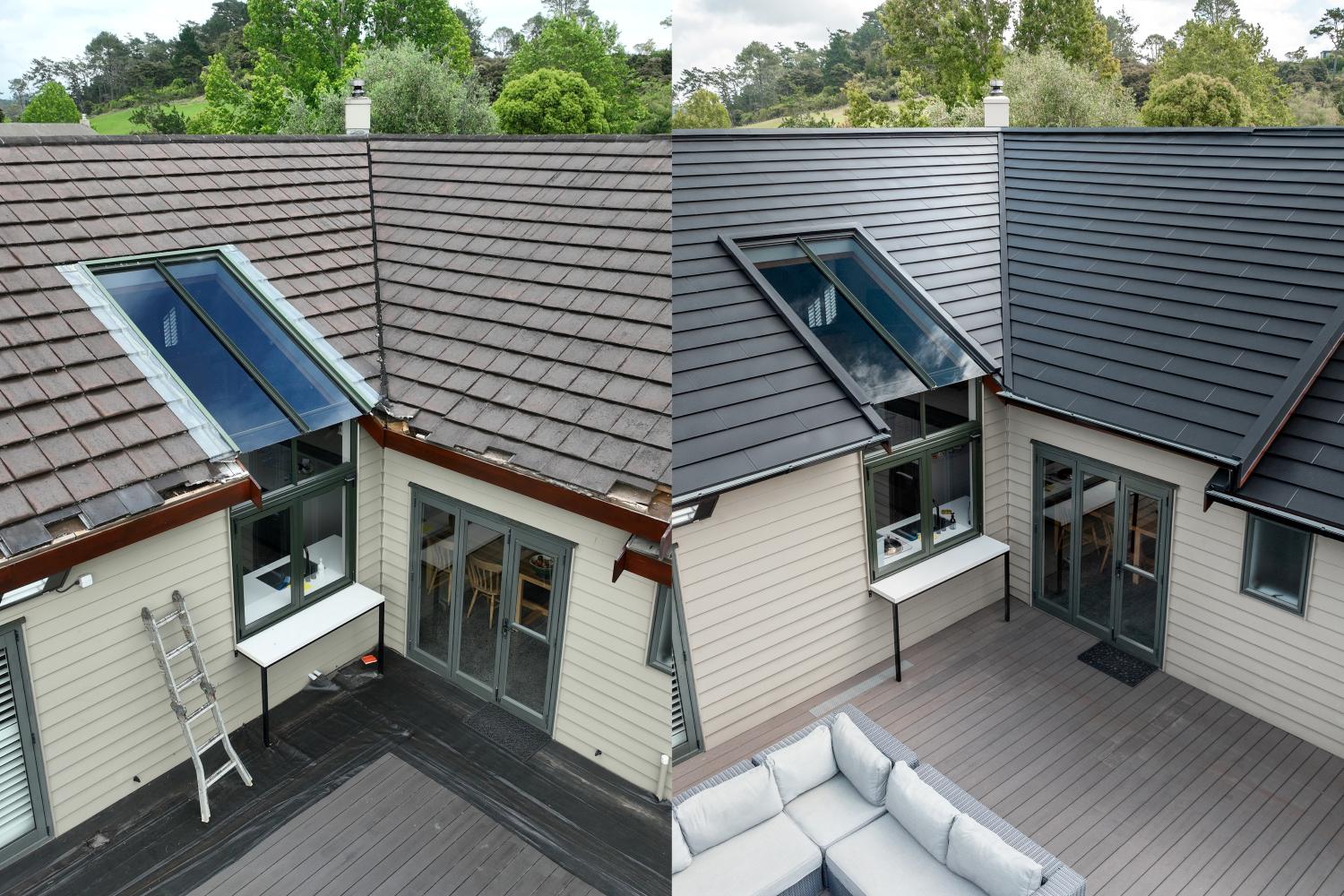


Brick and tile. It’s a common saying when talking about a solid older house. New Zealand’s affinity with concrete tile roofs began in the early 1910’s, when Auckland-based company Cowperthwaite Roofing Company manufactured the first concrete roof tiles in the world. However, concrete tiles have their issues, with tiles becoming brittle and porous over time and prone to cracking. Throughout their lifetime water seeps into the tiles increasing their weight causing the rafters to sag. These tiles have a limited lifespan, are high-maintenance and need to be replaced eventually.
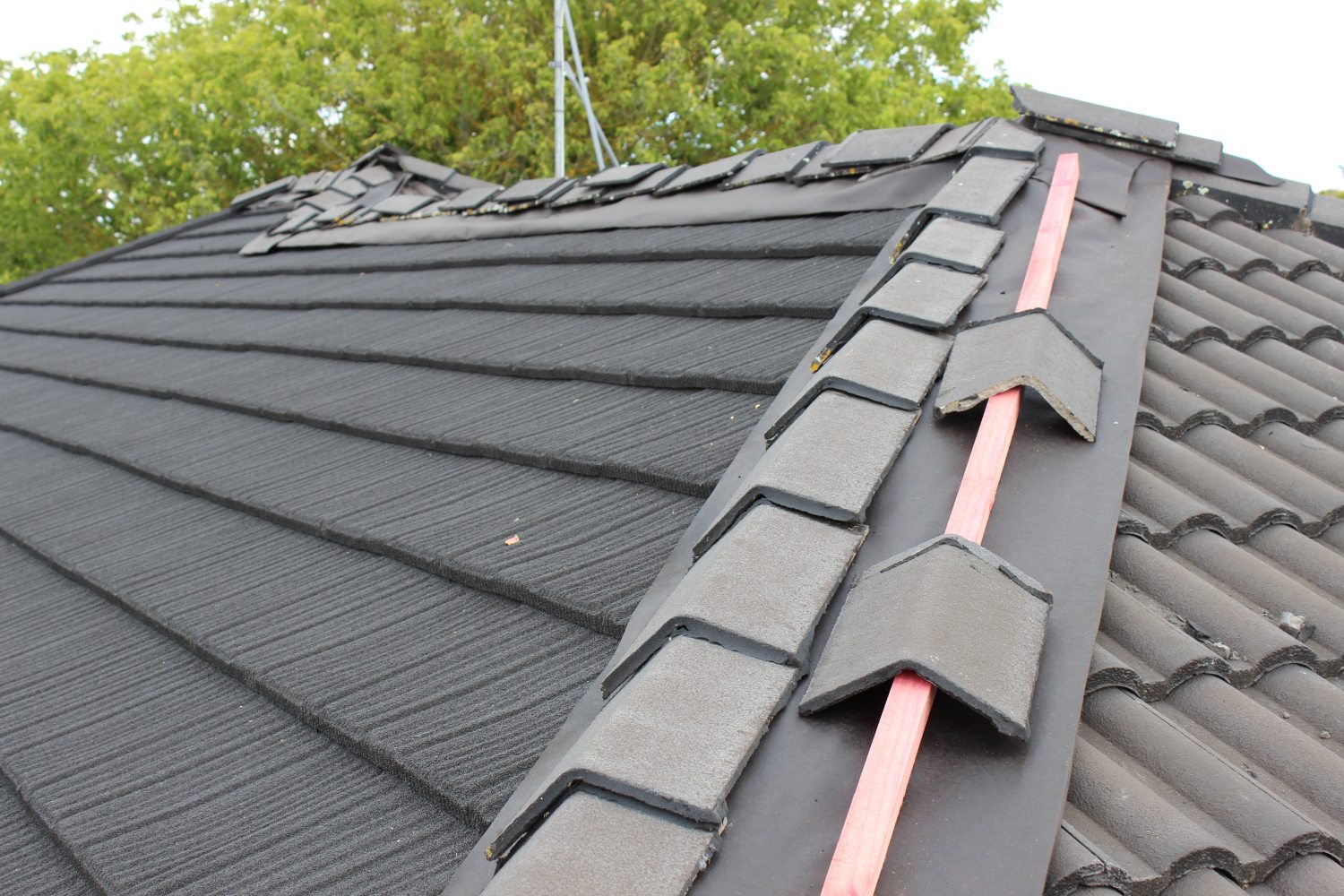
Ever the pioneers, kiwis were also at the helm of innovating metal roofing. In 1957 L.J Fisher & Co (known today as Gerard) developed the first stone coated metal roof tile. This roofing, a durable, lightweight, transportable material changed how we build homes, here and around the world. This light roofing is particularly good in earthquake and cyclone prone regions, due to its tight matrix of interlocking tiles and fastening method. Where concrete tiles dislodge and become heavy projectiles, Gerard’s steel tiles hold tightly together.
By nature, concrete tiles are dense and New Zealand’s Building Code categorises them as a ‘Heavy Roof’. The main force this kind of roof has to deal with is a downward load, where the main question is “can your house support the weight of the roof?”. This is what makes switching across to a lightweight roof, like a Gerard steel tile roof, easy. The framing of your home can already take the load of a heavy roof so, as long as there isn’t any structural damage to your home, it will be able to take a lighter roof.